Joey HejnaI'm a research scientist at Cursor, where I train the models that train Composer. I completed my PhD in computer science at Stanford University where I was advised by Dorsa Sadigh and supported by an NDSEG fellowship. I was also a research intern at Physical Intelligence and a student researcher in the Google DeepMind Robotics group. During my undergrad at UC Berkeley I worked with Professors Pieter Abbeel and Lerrel Pinto. |

|
Research
I'm broadly interested in learning for decision making and robotics. Papers (and preprints) are ordered by recency. * denotes equal contribution.
|
Composer 2 Technical Report
Cursor arXiv 2026 paper The technical report for Composer 2, Cursor's coding model. |
|
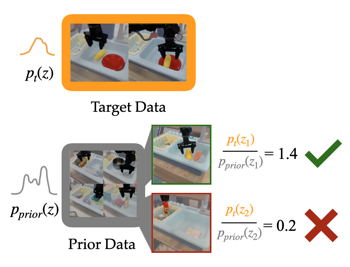
Data Retrieval with Importance Weights for Few-Shot Imitation Learning
Amber Xie, Rahul Chand, Dorsa Sadigh, Joey Hejna CoRL 2025 (Oral) paper / website / code Importance Weighted Retrieval (IWR) is a retrieval method that estimates importance weights, or the ratio between the target and prior data distributions, using Gaussian KDEs on top of existing retrieval methods. |
|
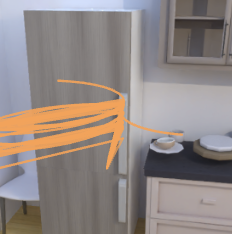
Scaffolding Dexterous Manipulation with Vision Language Models
Vincent de Bakker, Joey Hejna, Tyler Ga Wei Lum, Onur Celik, Aleksandar Taranovic, Denis Blessing, Gerhard Neumann, Jeannette Bohg, Dorsa Sadigh NeurIPS 2025 paper / website / code We use VLM generated plans to guide low-level RL for dexterous manipulation tasks. |
|
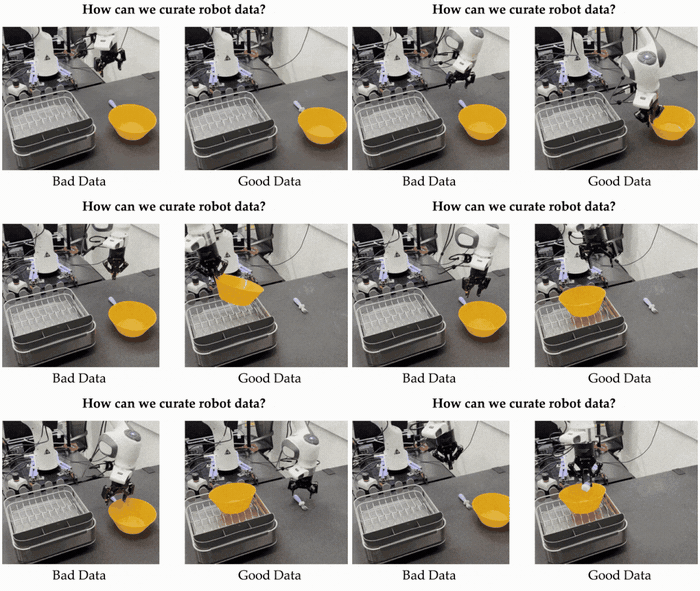
Robot Data Curation with Mutual Information Estimators
Joey Hejna, Suvir Mirchandani, Ashwin Balakrishna, Annie Xie, Ayzaan Wahid, Jonathan Tompson, Pannag Sanketi, Dhruv Shah, Coline Devin*, Dorsa Sadigh* RSS 2025 paper / website / code We introduce a new method for robot data curation that uses mutual information to select the most informative demonstrations. We show that this approach outperforms existing methods in both simulation and real-world settings. |
|
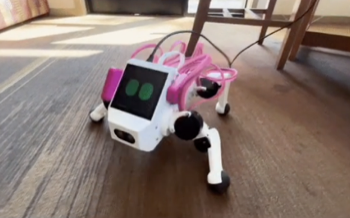
Efficiently Generating Expressive Quadruped Behaviors via Language-Guided Preference Learning
Jaden Clark, Joey Hejna, Dorsa Sadigh ICRA 2025 paper / website This paper introduces a novel approach that leverages priors generated by pre-trained LLMs alongside the precision of preference learning. Our method, termed Language-Guided Preference Learning (LGPL), uses LLMs to generate initial behavior samples, which are then refined through preference-based feedback to learn behaviors that closely align with human expectations. |
|
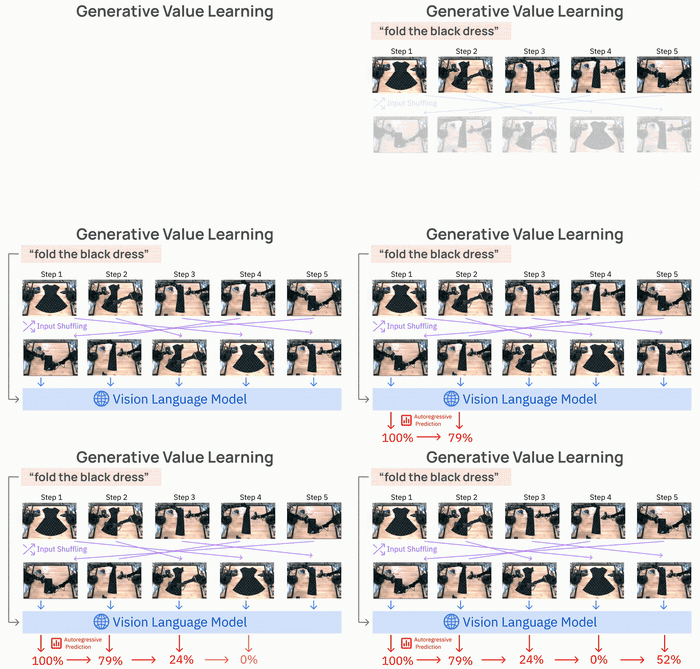
Vision Language Models are In-Context Value Learners
Jason Ma, Joey Hejna, ... Google DeepMind Robotics ..., Dorsa Sadigh, Fei Xia ICLR 2025 paper / website GVL poses value estimation as a temporal ordering problem over shuffled video frames; this seemingly more challenging task encourages VLMs to more fully exploit their underlying semantic and temporal grounding capabilities to differentiate frames based on their perceived task progress, consequently producing significantly better value predictions. |
|
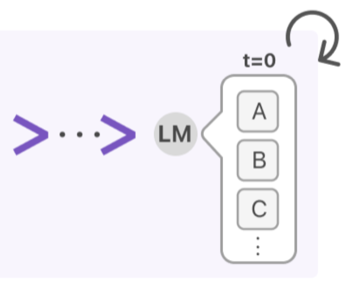
Show, Don't Tell: Aligning Language Models with Demonstrated Feedback
Omar Shaikh*, Michelle Lam*, Joey Hejna*, Yijia Shao, Michael Bernstein, Diyi Yang ICLR 2025 paper / code We introduce DITTO, an algorithm for few-shot adaptation or alignment of large language models using only two or three human demonstrations. We show that DITTO outperforms prior methods by a significant margin on automated evals and a real-world user study. |
|
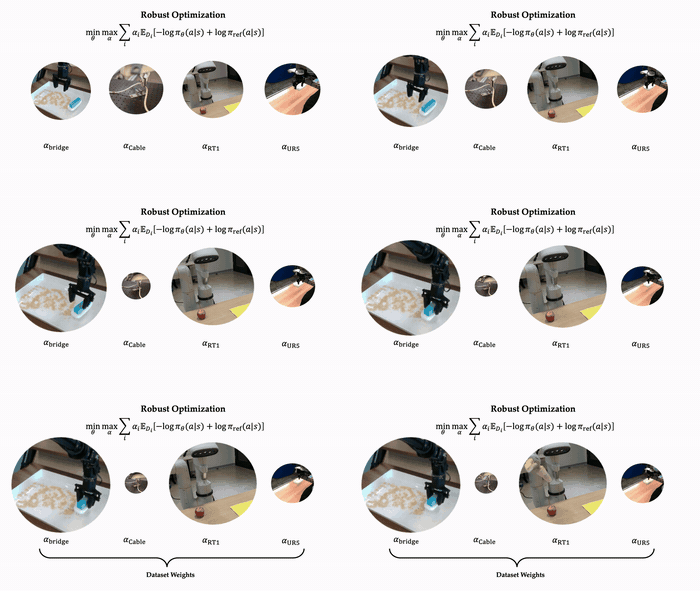
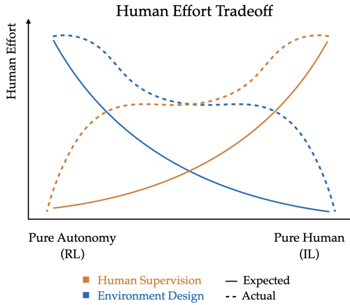
ReMix: Optimizing Dataset Mixtures for Large Scale Imitation Learning
Joey Hejna, Chethan Bhateja, Yichen Jiang, Karl Pertsch, Dorsa Sadigh CoRL 2024 (Best Paper Nominee, top 6 of 671) paper / code We introduce ReMix, a recipe for automatically curating data mixtures for training large scale robotic imitation learning policies. We demonstrate improvements over human-curated and uniform dataset mixtures. |
|
So You Think You Can Scale Up Autonomous Robot Data Collection?
Suvir Mirchandani, Suneel Belkhale, Joey Hejna, Evelyn Choi, Md Sazzad Islam, Dorsa Sadigh CoRL 2024 paper We investigate how well success-filtered autonomous imitation can work in real-world robotics settings. |

|
MotIF: Motion Instruction Fine-tuning
Minyoung Hwang, Joey Hejna, Dorsa Sadigh, Yonatan Bisk IEEE RA-L paper / website Evaluating robot motions involves more than just the start and end states; it's about how the task is performed. We propose motion instruction fine-tuning (MotIF) and the MotIF-1K dataset to improve VLMs' ability to understand nuanced robotic motions. |
|
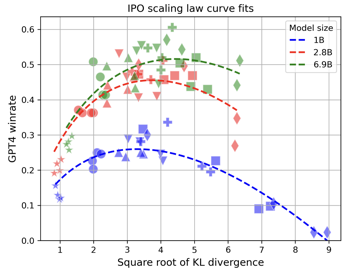
Scaling Laws for Reward Model Overoptimization in Direct Alignment Algorithms
Rafael Rafailov*, Yaswanth Chittepu*, Ryan Park*, Harshit Sikchi*, Joey Hejna, W. Bradley Knox, Chelsea Finn, Scott Niekum NeurIPS 2024 paper Through extensive experimentation and multiple model scales we characterize the over-optimization problem for direct alignment algorithms in large language models. |
|
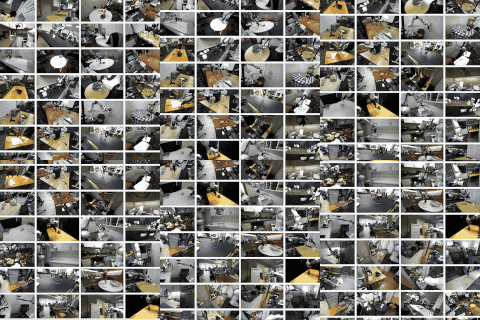
DROID: A Large-Scale In-the-Wild Robot Manipulation Dataset
Alexander Khazatsky*, Karl Pertsch*, ..., Joey Hejna, ..., Sergey Levine, Chelsea Finn RSS 2024 paper / website / code A large diverse dataset collected across multiple institutions totaling over 75K robot trajectories. |

|
From r to Q*: Your Language Model is Secretly a Q-Function
Rafael Rafailov*, Joey Hejna*, Ryan Park, Chelsea Finn COLM 2024 paper Understanding direct alignment algorithms for LLMs through the perspective of a per-token Markov Decision Process. |
|
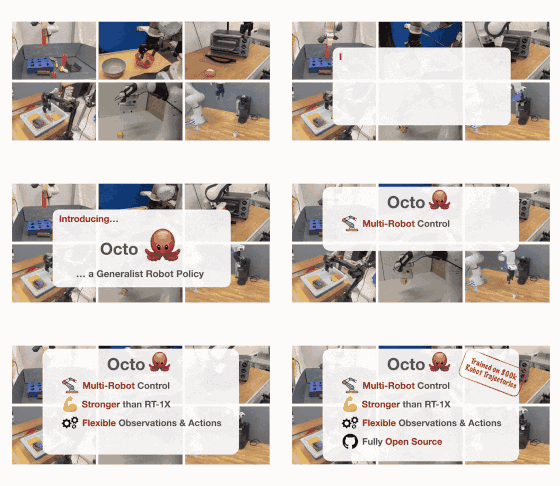
Octo: An Open-Source Generalist Robot Policy
Dibya Ghosh*, Homer Walke, Karl Pertsch*, Kevin Black*, Sudeep Dasari, Joey Hejna, Charles Xu, Jianlan Luo, Tobias Kreiman, You Liang Tan, Dorsa Sadigh, Chelsea Finn, Sergey Levine RSS 2024 paper / website / code Laying the groundwork for a foundation model for robotics. |
|
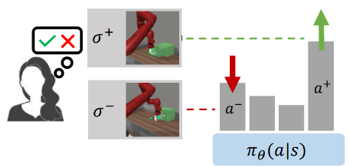
Contrastive Preference Learning: Learning from Human Feedback without RL
Joey Hejna, Rafael Rafailov*, Harshit Sikchi*, Chelsea Finn, Scott Niekum, W. Bradley Knox, Dorsa Sadigh ICLR 2024 paper / code Reduces Reinforcement Learning from Human Feedback to contrastive learning under the regret model of human preferences, which has recently been shown to be more accurate than the widely accepted reward model. Unlike many RLHF methods, CPL is fully off-policy and works on arbitrary MDPs. |
|
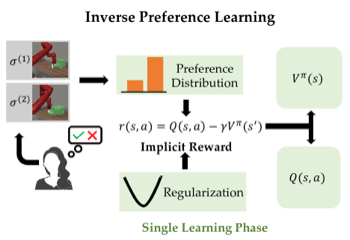
Inverse Preference Learning: Preference-based RL without a Reward Function
Joey Hejna, Dorsa Sadigh NeurIPS 2023 paper / code Approaches to preference-based RL typically work in two phases: first a reward function is learned, then it is maximized using a vanilla RL algorithm. We introduce the Inverse Preference Learning framework, where we directly learn a Q-function that models the user's preferences without explicitly learning a reward function. |
|
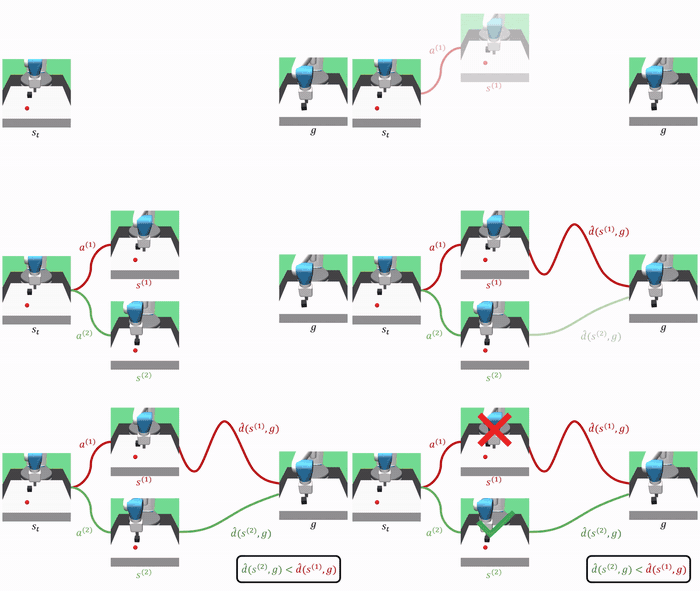
Distance Weighted Supervised Learning for Offline Interaction Data
Joey Hejna, Jensen Gao, Dorsa Sadigh ICML 2023 paper / website / code We introduce DWSL, an algorithm for offline goal-conditioned reinforcement learning that uses only supervised objectives while still learning a constrained optimal policy. DWSL performs particularly well on high-dimensional image domains and seems robust to hyperparameters. |
|
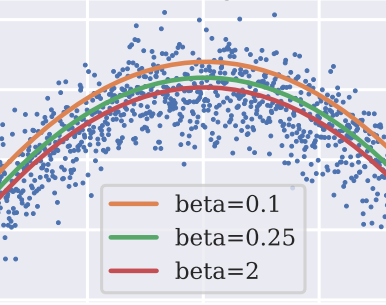
Extreme Q-Learning: MaxEnt RL without Entropy
Divyansh Garg*, Joey Hejna*, Matthieu Geist, Stefano Ermon ICLR 2023 (Notable, Top 5% of Submissions) paper / code We introduce a novel framework for Q-learning that models the maximal soft-values without needing to sample from a policy and improves performance in online and offline RL settings. |
|
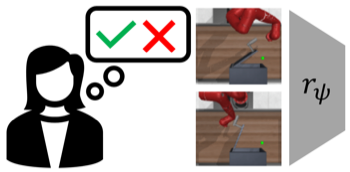
Few-Shot Preference Learning for Human-in-the-Loop RL
Joey Hejna, Dorsa Sadigh CoRL 2022 paper / website / code Pretraining preference models greatly reduces query-complexity, enabling humans to teach robots with a reasonable amount of feedback. |
|
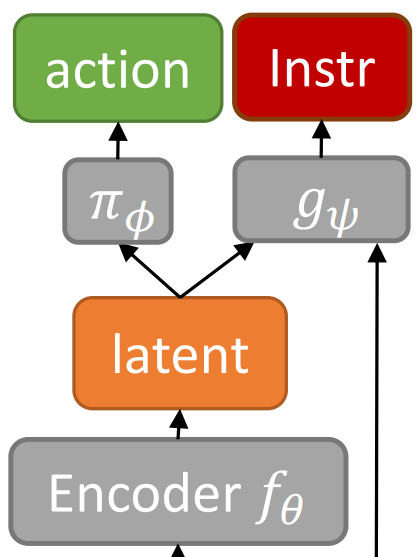
Improving Long-Horizon Imitation through Instruction Prediction
Joey Hejna, Pieter Abbeel, Lerrel Pinto AAAI 2023 paper / code We show that predicting instructions along with actions drastically improves performance in combinatorially complex long-horizon imitation settings. |
|
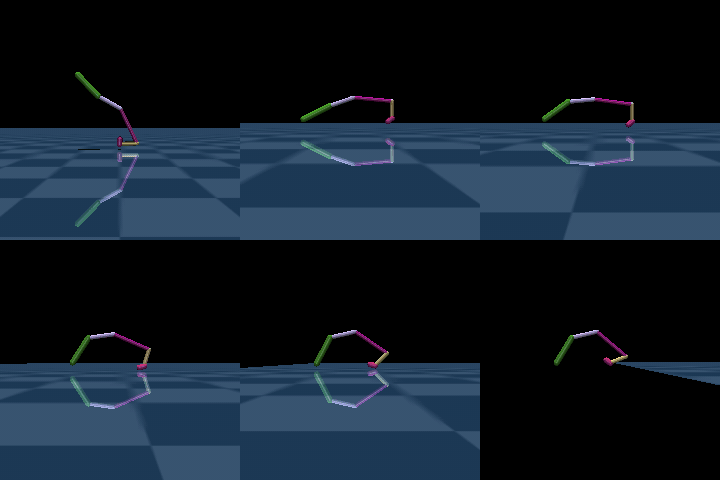
Task-Agnostic Morphology Evolution
Donald J. Hejna III, Pieter Abbeel, Lerrel Pinto ICLR 2021 paper / website / code Better robot structures hold the promise of better performance. We propose a new algorithm, TAME, that is able to evolve morphologies without any task specification. This is accomplished using an information theoretic objective that efficiently ranks morphologies based on their ability to explore and control their environment. |
|
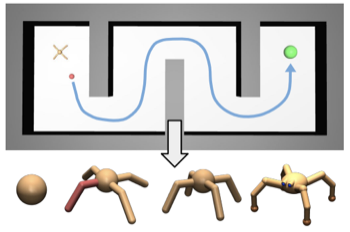
Hierarchically Decoupled Imitation for Morphological Transfer
Donald J. Hejna III, Pieter Abbeel, Lerrel Pinto ICML 2020 paper / website / code / talk We propose transferring RL policies across agents using a hierarchical framework. Then, to remedy poor zero-shot transfer performance we introduce two additional imitation objectives. |
Projects

|
Research Lightning
Joey Hejna Open source project code A lightweight framework for general deep-learning research in PyTorch. |
|
OpenX Repository
Joey Hejna Open source project code A repository for training large behavior models in Jax/Flax/tfds. |
|
Improving Latent Representations via Explicit Disentanglement
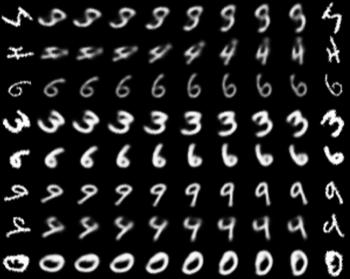
Joey Hejna*, Ashwin Vangipuram*, Kara Liu* Course Project, CS 294-158 Unsupervised Learning, Spring 2020 paper We examine and compare three methods for explicitly disentangling learned latent representations in VAE models. |
Awards
- National Defense Science and Engineering Graduate Fellowship (NDSEG) 2021, roughly 5% selection rate.
- Honorable mention for the 2021 CRA Outstanding Undergraduate Researcher Award
- Highest Degree Honors in Engineering at UC Berkeley Spring 2021, top 3% of the graduating class.
- UC Berkeley Regents and Chancellors Scholarship
- Rambus Innovator of the Future 2017
Industry

|
Research Scientist, Cursor
2025 – Training the models that train Composer, Cursor's coding model. |

|
Research Intern, Physical Intelligence
Summer 2025 Working on data collection, labeling, and training more reactive policies. |

|
Student Researcher, Google DeepMind Robotics
Summer 2024 Working on the machine learning and robotics team. |

|
Intern, Citadel Global Quantitative Strategies
Summer 2019 Developed C++ systems for trading APIs and monitoring systems. Worked on optimizing memory usage of large model training. |
|
Intern, Intel Artificial Intelligence Group
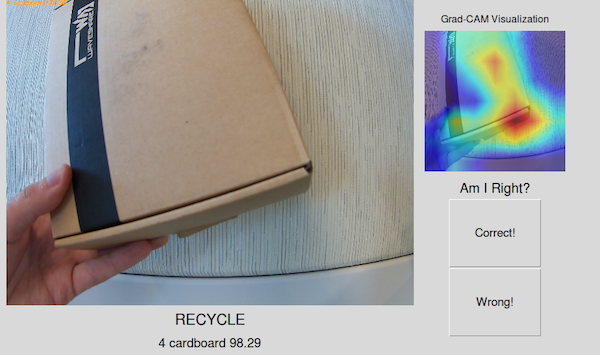
Summer 2018 blog post Worked on demo systems for Intel's OpenVINO model optimization system in the AWS DeepLens. Explored systems for gradient based explanations of deep networks. |
Teaching and Service

|
Reviewer
NeurIPS 2023 (Outstanding Reviewer), ICML 2024 (Outstanding Reviewer), ICML 2023, ICLR 2025, CoRL 2024, ICRA 2025, IEEE RA-L, RL-Brew at RLC 2024 |

|
Computer Science Department at Stanford and UC Berkeley
Course Assistant, CS 221: Artificial Intelligence, Autumn 2024 Head Course Assistant, CS 221: Artificial Intelligence, Autumn 2023 Teaching Assistant, EECS 127: Optimization Models, Fall 2020 Teaching Assistant, EECS 189: Machine Learning, Spring 2020 Teaching Assistant, CS 70: Discrete Math and Probability Theory, Fall 2019 |
|
Public Resources |